Biography
John William Waterhouse (1849–1917)

Overview
Waterhouse painted figurative and narrative pictures primarily in the medium of oil. He found inspiration in stories and legends from British literature and Classical mythology. His paintings are scattered throughout the world: many are owned by public museums in the United Kingdom, Australia and elsewhere. Others are in the hands of private collectors in the UK, USA and Russia. Waterhouse's most famous painting is The Lady of Shalott (1888) owned by London's Tate Gallery. It depicts a scene from Alfred Lord Tennyson's poem of the same name.
Reputation
In his lifetime, Waterhouse was well regarded by his fellow artists, art critics and the general public. His work fell out of fashion, along with that of other Victorian painters, with the advent of the First World War, and wouldn't become popular again (with the public at least) until the late 20th century.
The Models
Waterhouse's paintings are famous for the feminine beauty depicted in them. His genre of female beauty became known as 'The Waterhouse Girl'. The identity of Waterhouse's models range from family members and friends, to professional artists' models. Some of the young female models would later become famous in their own right as renowned stage actresses and movie stars.
Life & Times
A chronology of key moments in Waterhouse's life and career
Born in Rome, Italy
John William Waterhouse was born on 6 April 1849 in Rome, where his father worked as a painter. He spent his early childhood immersed in art and antiquity.
Royal Academy Schools
The family returned to England and Waterhouse enrolled at the Royal Academy Schools in London, studying under the influence of classical tradition and the Pre-Raphaelites.
Royal Academy Debut
Waterhouse exhibited publicly for the first time at the Royal Academy Summer Exhibition, showing 'Sleep and his Half-Brother Death' to favourable critical attention.
The Lady of Shalott
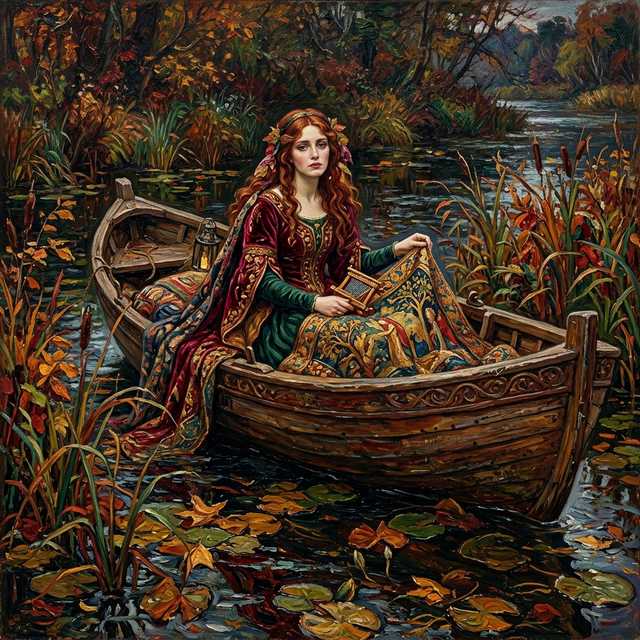
His most celebrated painting, inspired by Tennyson's Arthurian poem, was exhibited at the Royal Academy and purchased for the Tate Gallery. It remains one of the most beloved Victorian paintings.
"His soul was enwrapped in the beauty of Italy, and it never left him." — Contemporary critic
Saint Cecilia
As Associate then full Royal Academician, Waterhouse produced a series of major works in the 1890s, including Saint Cecilia, showcasing his mature Pre-Raphaelite style.
Death in London
Waterhouse passed away on 10 February 1917 in St John's Wood, London, his last canvas unfinished. He is buried at Kensal Green Cemetery, leaving a legacy of extraordinary beauty.
"Waterhouse's work is a dream, a poem in paint, capturing the ethereal and the tragic." — Sir Frederic Leighton